Lisa Haylock · Teacher · Lifelong student
My experience with yoga has been quiet and profound. For the past fifteen years, it has been a steady thread and a cherished companion in my life — offering grounding through seasons of growth, loss, self-inquiry, and change.
In living alongside this practice, I’ve found a way to move through life’s ups and downs with greater clarity and grace. Through consistency and devotion, yoga has taught me how to stay present within my experience — to listen more deeply, to respond rather than react, and to meet change with steadiness. This way of living has shaped not only my practice, but how I move through the world.
My teaching and personal practice draw from Hatha, Ashtanga, and restorative traditions. While these forms may appear different on the surface, I experience them as deeply connected — each offering its own rhythm, discipline, and invitation into awareness.
I first came to yoga through vinyasa flow, and soon after found my way to Ashtanga. The structure and repetition of this practice became a turning point in my life. The steadiness of daily practice, the clarity of the sequence, and the quiet way progress revealed itself over time offered strength, confidence, and a deep sense of embodiment. The discipline of Ashtanga shaped my mindset as much as my body, cultivating patience, resilience, and an enduring relationship with practice.
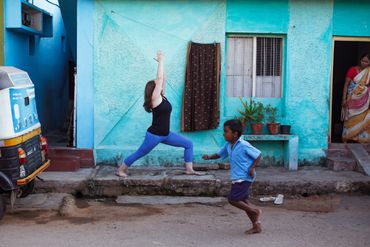
This devotion led me to India and Nepal, where I spent six months immersed in study and tradition. I completed my initial 200-hour Yoga Teacher Training at the World Peace Yoga School in Rishikesh, and later found my primary teacher, Yogacharya Bharath Shetty, in Mysore. I have since returned to Mysore multiple times for continued study and advanced training. These journeys were not about accumulation, but about deepening — a sustained commitment to practice, study, and lived understanding.
From this solid Ashtanga foundation, a doorway toward Hatha gradually emerged. Slower and more methodical, Hatha offered a different kind of depth: longer time within postures, heightened body awareness, and the flexibility to adapt practice to meet changing needs. It revealed the value of staying, of listening closely, and of allowing the practice to unfold from within rather than be driven by effort alone.
Over time, my understanding of yoga has continued to widen. I have witnessed its capacity to bring steadiness, healing, and a sense of peace — not as something imposed, but as something gently cultivated. This became especially clear through my work teaching yoga in prison settings, where I saw firsthand how simple, consistent practices could offer moments of calm, dignity, and self-connection in even the most difficult circumstances. These experiences affirmed for me that yoga is a gift to humanity.
I firmly believe that teaching grows from dedicated personal practice. Yoga is not something we perfect or complete, but something we live alongside — a lifelong path that continues to shape how we meet ourselves and the world. This is why I describe myself as both a teacher and a lifelong student.
Today, I teach from a place of lived practice and ongoing inquiry. I am drawn to working with students who are seeking steadiness, depth, and a more intimate relationship with yoga — whether they are new to practice or have been walking this path for many years. My teaching is attentive, responsive, and rooted in the understanding that yoga meets each person differently, offering what is needed within each evolving moment.